Mastering the Science of Choice, Informing the Art of Policy
The Department of Economics is domiciled in the College of Arts, Social and Management Sciences (CASMAS), Caleb University, Lagos. It commenced academic activities in 2008 with an initial cohort of 25 students and has since recorded sustained growth in enrolment, reflecting rising demand for economics education. The Department currently maintains a healthy staff/student structure, with qualified academic staff that delivers undergraduate programmes aligned with the National Universities Commission (NUC) Benchmark Minimum Academic Standards (BMAS) and newly adopted Core Curriculum Minimum Academic Standards (CCMAS). The Department has a growing student population drawn from diverse backgrounds. Studying Economics at Caleb University equips students for careers in both the public and private sectors of the economy, namely public service, business, financial services, non-profit organisations and the academia. In the course of the program, emphasis is laid on strong analytical, quantitative, communication, and problem-solving skills relevant to contemporary economic challenges.
Guided by a clear mission and vision, the department has received full accreditation standing in the NUC accreditation exercises in 2009, 2014, 2019 and 2024. This attests to its academic quality and institutional stability. Its curriculum integrates theory and practice through hands-on research, extensive student and lecturer interaction, and specialised value-adding groups in data analysis, economic discuss and entrepreneurship. The Department is further strengthened by a state-of-the-art econometrics laboratory that provides practical training in modern statistical and econometric software for social science research.
The Department of Economics is committed to producing policy-literate, highly employable graduates with critical and independent thinking skills, while fostering a dynamic environment that supports impactful research and meaningful engagement with society, industry and the public sector. The current Head of the Department is Professor Ndubisi I. Nwokoma (FNES), a Fellow of the Nigerian Economic Society (NES) and thus a member of the prestigious College of Fellows and Past Presidents of the Society.
- Key Focus Areas: Development Economics, Monetary Economics, International Trade, Econometrics, Public Sector Economics.
- Distinctive Edge: A strong focus on the Nigerian and African economic context, applied policy research projects, and training in data analysis software (e.g., STATA, E-Views).
- Career Pathways: Economic Research & Consulting, Data Analysis, Central Banking, Financial Markets, Policy Advisory, and roles in International Development Organizations.
Equip yourself to decode the economy and drive evidence-based progress
.
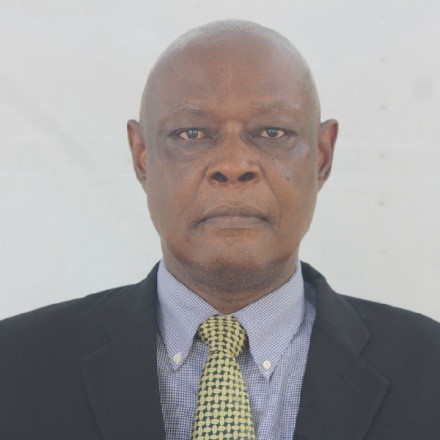
Professor Ndubisi Ifeanyi Nwokoma
HODProfessor Ndubisi Ifeanyi Nwokoma is Professor of Economics and currently Head, Department of Economics at Caleb University, Imota, Lagos. Prior to this he was Director (and later, Chairman, Advisory Board) of the Centre for Economic Policy Analysis and Research of the University of Lagos, Nigeria up to May 2025. He was conferred with the prestigious Fellowship of the Nigerian Economic Society in 2022. He is also a Fellow of the Chartered Institute of Stockbrokers of Nigeria. He was Head of the Department of Economics of the University of Lagos between 2012 and 2016. He worked at the United Nations Economic Commission for Africa, Addis Ababa, as Chief of Financing, Industry & Investment in the Economic Development and NEPAD Division between 2010 and 2012 on a Leave of Absence from the University where he undertook economic missions, on various United Nations assignments, to different African countries, namely, Djibouti, South Africa, Senegal, Algeria, Tunisia, Mauritius and Nigeria. He was also part of the African team that made presentation at the High-Level Forum on Aid Effectiveness, organized by the OECD in Busan, South Korea and another team that presented Africa’s position on financing for development at the United Nations General Assembly in New York, USA, both in 2011. Professor Nwokoma was also at The Nigerian Stock Exchange, Lagos between 2008 and 2009 on Sabbatical, where he served as Special Assistant to the Director General/Chief Executive Officer. He was a University Scholar at the University of Ibadan, Nigeria where he obtained the PhD degree in Economics specialising in macro econometric modelling and policy analysis.
His university career started at the Ogun State University, Ago-Iwoye, Nigeria (1984–1985). He later joined the Federal University of Technology, Owerri, Nigeria (1985–1988). He joined the banking industry in 1988 and served as special assistant to the CEO of Progress Bank Nigeria Plc. up to 1990 and later ABC Merchant Bank Nigeria Limited (1990-1994) where he was Head of the Corporate Planning Division and then later worked at the ESUT Business School Lagos, as Assistant Director between 1995 and 2000.
He joined the Department of Economics of the University of Lagos in 2001, rose through the ranks and was appointed Full Professor effective 1st October, 2010. His teaching and research interests include macroeconomic policy, economic theory, financial markets and quantitative economics. He delivered his Inaugural Lecture in May 2016 at the University of Lagos on the subject “Money Answereth All Things: Issues in the Financing of Development”. He has attended many conferences both locally and internationally and has numerous publications to his credit. He is a member of professional associations such as the American Economic Association, African Finance and Economics Association, African Econometrics Society, Chartered Institute of Stockbrokers of Nigeria and the Nigerian Economic Society where he served on the Executive Council for many years and was the Editor of the Society’s flagship Journal, the Nigerian Journal of Economic and Social Studies, NJESS, between 2013 and 2019. He represented the University of Lagos on the Board of Financial Institutions Training Centre, FITC, from 2016 to 2018.